Polygonaceae
Buckwheat: Ground Cover Plant
Fagopyrum esculentum
It is an easy-to-grow plant that prefers full sun and well-drained soils. It is very sensitive to frost and has a short life cycle, completing in about 70 to 90 days.
Every 6 days
Direct sun
7° - 40°C
30% - 50%
Categories
What is Buckwheat?
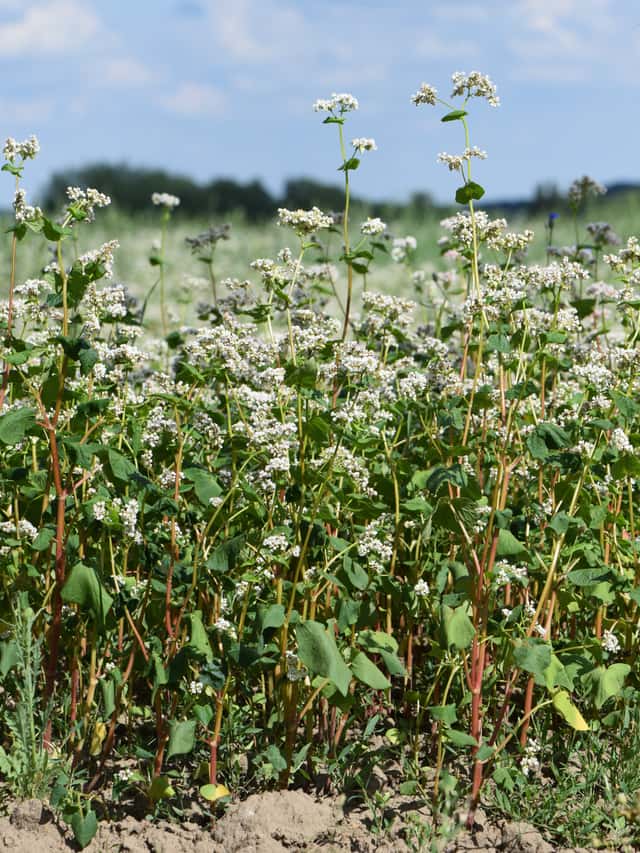
Buckwheat (Fagopyrum esculentum) is a easy-care plant from the Polygonaceae family. Buckwheat is an extremely fast-growing annual herbaceous plant. Although it is used as a cereal, it is technically a pseudocereal belonging to the Polygonaceae family. Its leaves are heart-shaped, and it produces clusters of small white or pink flowers that are very attractive to bees. Its triangula...
Buckwheat grows up to 1.5m, with spread of 30cm, watering every 6 days, 7°C – 40°C, 30–50% humidity. It is not suitable for indoor environments and not safe for pets.
Unlike many tropical plants, Buckwheat tolerates watering mistakes. Best for beginners. Without precautions, ingestion can cause irritation in pets. Keep out of reach of cats and dogs.
How to Care for Buckwheat?
TLDR: Buckwheat needs Direct sun, watering every 6 days, and temperatures between 7-40°C with 30-50% humidity.
How Often Should You Water Buckwheat?
Maintain consistent moisture during the flowering stage to ensure good seed formation.
How Much Light Does Buckwheat Need?
Requires at least 6 hours of direct sunlight per day for optimal flowering and grain production.
What Is the Best Soil for Buckwheat?
Tolerates poor and acidic soils, but avoid heavy clay soils that retain too much moisture.
What Pot Should You Use for Buckwheat?
Direct ground cultivation is recommended, but if grown in pots, they should be deep and have excellent drainage.
What Is Buckwheat and Where Does It Come From?
Buckwheat is an extremely fast-growing annual herbaceous plant. Although it is used as a cereal, it is technically a pseudocereal belonging to the Polygonaceae family. Its leaves are heart-shaped, and it produces clusters of small white or pink flowers that are very attractive to bees. Its triangular grains are highly nutritious and gluten-free.
How to Propagate Buckwheat?
Direct Sowing
- Sow after all risk of frost has passed
- Does not require excessive fertilization, as it can favor foliage over grain production
- 1 Soil Preparation
Lightly till the soil and remove weeds.
- 2 Sowing
Bury seeds to a depth of 2 to 3 cm.
- 3 Initial Watering
Water gently to settle the soil without waterlogging.
Materials needed:
How Big Does Buckwheat Grow?
TLDR: Buckwheat can reach up to 1.5m tall with Fast growth rate.
Max height
1.5m
Spread
30cm
Growth rate
Fast
Foliage
Deciduous
Warning: Toxic Plant
This plant can be toxic if ingested. Keep out of reach of:
Plant Uses
Edible
Can be consumed
Medicinal
Medicinal properties
Ornamental
Great for decoration
Ground Cover
Soil coverage
Medicinal Uses
- Source of rutin to strengthen capillaries
- Helps improve blood circulation
- Antioxidant properties
Culinary Uses
- Flour for pancakes and galettes
- Japanese soba noodles
- Kasha (roasted groats)
- Sprouts in salads
Is your plant showing symptoms?
Click on the symptom to discover possible causes:
What Diseases Commonly Affect Buckwheat?
TLDR: Buckwheat is susceptible to 7 known diseases. Monitor regularly for early detection.
Root Rot
Root rot is a serious fungal disease that affects the root system of plants, causing them to decay and die. It is primarily caused by overwatering, poor drainage, or soil-borne fungi such as Pythium, Phytophthora, Rhizoctonia, and Fusarium. The disease thrives in waterlogged conditions where roots are deprived of oxygen, making them susceptible to fungal infection.
Leaf Spot
Leaf spot is a common fungal disease caused by various pathogens including Alternaria, Ascochyta, Colletotrichum, Septoria, and Venturia. It primarily affects leaves, causing discolored spots that can lead to premature leaf drop if left untreated.
Powdery Mildew
Powdery mildew is a common fungal disease caused by various fungi species including Erysiphe, Podosphaera, Oïdium, and Leveillula. It affects over 10,000 plant species worldwide. The disease thrives in warm, dry climates with high humidity and appears as a distinctive white powdery coating on plant surfaces.
Aphids
Aphids are small, soft-bodied, pear-shaped insects (1/16 to 1/8 inch long) that feed by sucking nutrient-rich sap from plants. They reproduce rapidly and can quickly weaken plants, causing distorted growth and transmitting plant viruses. Aphids come in various colors including green, black, red, yellow, brown, and gray. They secrete honeydew, a sticky substance that attracts ants and encourages sooty mold growth.
Meaning & Symbolism
In some cultures, it represents resilience and the ability to thrive in difficult conditions.
Compare with similar plants
| Attribute | Difficulty | Light | Watering | Pet Safe |
|---|---|---|---|---|
| Peace Lily | Easy | Low light | 4d | ⚠️ |
| Swiss Cheese Plant | Easy | Partial shade | 10d | ⚠️ |
| Golden Pothos | Easy | Low light | 8d | ⚠️ |
| ZZ Plant | Easy | Low light | 18d | ⚠️ |