Amaryllidaceae
Belladonna Lily: Full Sun Plant
Amaryllis belladonna
Requires full sun and well-drained soil. It is essential to allow a dry dormancy period after flowering to ensure new blooms the following year.
Every 14 days
Direct sun
10° - 32°C
30% - 50%
Categories
What is Belladonna Lily?
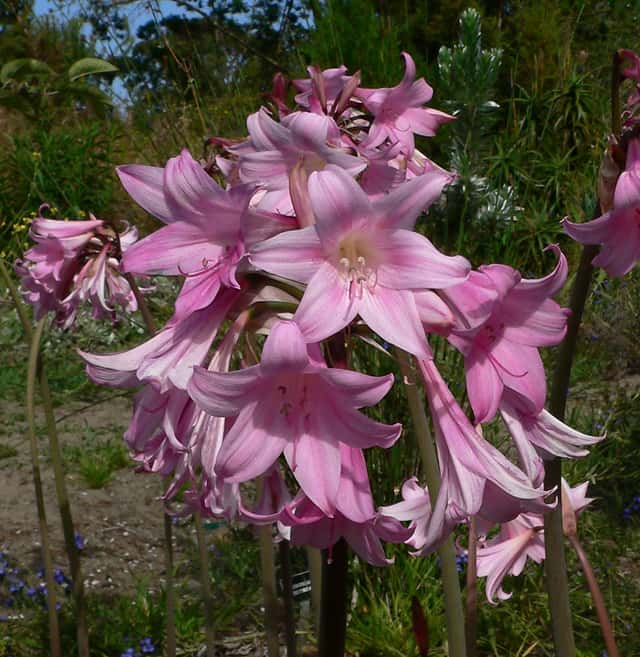
Belladonna Lily (Amaryllis belladonna) is a easy-care plant from the Amaryllidaceae family. A perennial bulbous plant native to South Africa, famous for its fragrant trumpet-shaped flowers that emerge on naked stems before the leaves appear. Its flowers range from pale pink to white and exude a sweet fragrance.
Belladonna Lily grows up to 90cm, with spread of 90cm, watering every 14 days, 10°C – 32°C, 30–50% humidity. It is suitable for indoor environments and not safe for pets.
Unlike many tropical plants, Belladonna Lily tolerates watering mistakes. Best for beginners. Without precautions, ingestion can cause irritation in pets. Keep out of reach of cats and dogs. Without adequate drainage, root rot can develop within 28 days.
How to Care for Belladonna Lily?
TLDR: Belladonna Lily needs Direct sun, watering every 14 days, and temperatures between 10-32°C with 30-50% humidity.
How Often Should You Water Belladonna Lily?
Water regularly during leaf growth, but almost completely suspend watering when the plant enters summer dormancy.
How Much Light Does Belladonna Lily Need?
Needs direct sun to bloom abundantly; in very shaded locations, the plant will only produce leaves.
What Is the Best Soil for Belladonna Lily?
Use a mixture of sandy soil rich in organic matter that allows for quick drainage to prevent bulb rot.
What Pot Should You Use for Belladonna Lily?
Deep clay or ceramic pots with drainage holes to accommodate long roots and prevent excessive moisture.
Care Schedule
Fertilize
Every 30 days
Repot
Every 1095 days
What Is Belladonna Lily and Where Does It Come From?
A perennial bulbous plant native to South Africa, famous for its fragrant trumpet-shaped flowers that emerge on naked stems before the leaves appear. Its flowers range from pale pink to white and exude a sweet fragrance.
How to Propagate Belladonna Lily?
Bulb division
- Avoid handling bulbs without gloves, as they can cause skin irritation.
- Do not overwater immediately after planting to prevent rot.
- 1 Bulb extraction
Carefully dig up the bulbs during the dormancy period once the leaves have dried.
- 2 Separation
Separate the small side bulbs (offsets) that have grown around the main bulb.
- 3 Planting
Replant the bulbs immediately in well-drained soil, leaving the neck of the bulb just above the soil line.
Materials needed:
How Big Does Belladonna Lily Grow?
TLDR: Belladonna Lily can reach up to 90cm tall with Slow growth rate.
Max height
90cm
Spread
90cm
Growth rate
Slow
Foliage
Deciduous
Warning: Toxic Plant
This plant can be toxic if ingested. Keep out of reach of:
Plant Uses
Ornamental
Great for decoration
Is your plant showing symptoms?
Click on the symptom to discover possible causes:
What Diseases Commonly Affect Belladonna Lily?
TLDR: Belladonna Lily is susceptible to 8 known diseases. Monitor regularly for early detection.
Root Rot
Root rot is a serious fungal disease that affects the root system of plants, causing them to decay and die. It is primarily caused by overwatering, poor drainage, or soil-borne fungi such as Pythium, Phytophthora, Rhizoctonia, and Fusarium. The disease thrives in waterlogged conditions where roots are deprived of oxygen, making them susceptible to fungal infection.
Spider Mites
Spider mites are tiny arachnids (less than 1/20 inch long) related to spiders and ticks that feed on plant sap. They thrive in hot, dry conditions and can cause significant damage to ornamental and vegetable plants. During severe infestations, crop losses can reach 14% or higher as these pests disrupt vital plant processes including photosynthesis, carbon dioxide absorption, and transpiration.
Mealybugs
Mealybugs are small, soft-bodied insects covered with a white, waxy, cottony material. They are common pests of houseplants and outdoor plants in mild climates. These sap-sucking insects feed on plant tissue, causing damage, stunted growth, and can lead to plant death if left untreated. They produce sticky honeydew which attracts sooty mold.
Aphids
Aphids are small, soft-bodied, pear-shaped insects (1/16 to 1/8 inch long) that feed by sucking nutrient-rich sap from plants. They reproduce rapidly and can quickly weaken plants, causing distorted growth and transmitting plant viruses. Aphids come in various colors including green, black, red, yellow, brown, and gray. They secrete honeydew, a sticky substance that attracts ants and encourages sooty mold growth.
Meaning & Symbolism
Represents pride, radiant beauty, and determination.
Compare with similar plants
| Attribute | Difficulty | Light | Watering | Pet Safe |
|---|---|---|---|---|
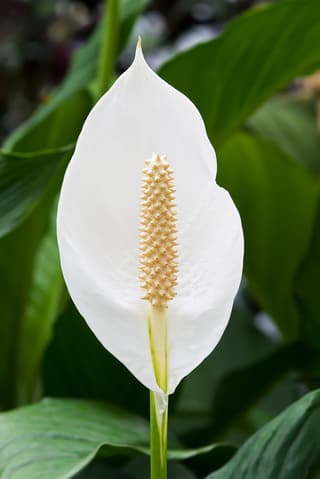
| Peace Lily | Easy | Low light | 4d | ⚠️ |
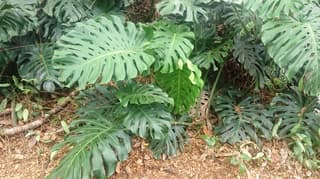
| Swiss Cheese Plant | Easy | Partial shade | 10d | ⚠️ |
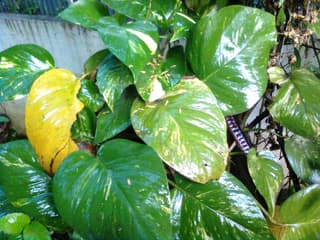
| Golden Pothos | Easy | Low light | 8d | ⚠️ |
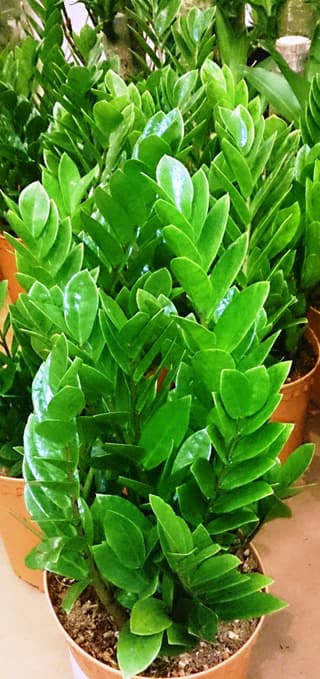
| ZZ Plant | Easy | Low light | 18d | ⚠️ |